
Discover the complete historical analysis of the Freedom Struggle of India — from early resistance to independence. Explore key movements, leaders, and legacies that shaped modern India.
Introduction: Understanding India’s Journey to Independence
The Freedom Struggle of India stands as one of the most inspiring sagas of resilience, courage, and collective determination in world history. For nearly two centuries, India endured British colonial rule that exploited its resources, restructured its economy, and altered its cultural identity. Yet, through organized movements, intellectual awakening, and moral conviction, India rose to reclaim its sovereignty in 1947.
This analysis explores the chronological journey of India’s freedom struggle — from early revolts and reformist efforts to mass movements and final liberation — providing a comprehensive look at how a subjugated nation transformed into a democratic powerhouse.
The Seeds of Nationalism: Early Resistance and Awakening (1757–1857)
The British Colonial Impact on India’s Economy and Society
After the Battle of Plassey (1757), the British East India Company established control over large parts of India. The colonial policies dismantled traditional industries, imposed exploitative taxation, and drained India’s wealth. Socially, the British enforced racial superiority and interfered in religious practices, sowing discontent among all classes.
The Revolt of 1857 : The First War of Independence
Often hailed as India’s first major rebellion against colonial rule, the Revolt of 1857 brought together soldiers, peasants, and princes. Though it failed militarily, it awakened political consciousness and paved the way for organized nationalist movements. Leaders like Rani Lakshmibai, Mangal Pandey, and Bahadur Shah Zafar became symbols of defiance.
The Rise of Political Consciousness (1858–1905)
The Formation of the Indian National Congress (INC)
Formed in 1885, the INC initially sought modest reforms through petitions and discussions. However, it soon evolved into a powerful platform representing the aspirations of millions. Leaders like Dadabhai Naoroji, Gopal Krishna Gokhale, and Surendranath Banerjee emphasized constitutional methods for change.
Socio-Religious Reform Movements and Their Role in Nationalism
Movements like the Brahmo Samaj, Arya Samaj, and Aligarh Movement challenged orthodoxy and promoted education, social equality, and patriotism. These reforms fostered unity among Indians beyond caste, religion, and region, laying the ideological foundation for political freedom.
The Partition of Bengal and the Swadeshi Movement (1905–1911 )
Economic Boycott and Promotion of Indigenous Goods
Lord Curzon’s Partition of Bengal triggered widespread outrage. The Swadeshi Movement encouraged Indians to boycott British goods and revive local industries. This economic defiance strengthened the spirit of self-reliance — “Be Indian, Buy Indian.”
Cultural Revival and the Role of the Press
Newspapers like Kesari, Amrita Bazar Patrika, and Bande Mataram became tools of resistance, spreading nationalist ideas and countering British propaganda.
The Home Rule Movement and World War I (1914–1918 )
Bal Gangadhar Tilak and Annie Besant’s Leadership
The Home Rule Movement, spearheaded by Tilak and Annie Besant, demanded self-government. Inspired by Ireland’s example, it united moderates and extremists under one banner — “Swaraj is my birthright.”
Political Awakening During Wartime
World War I deepened India’s economic misery but also exposed British hypocrisy on freedom. Soldiers returning from the front carried new hopes for liberty.
The Gandhian Era: Non-Violent Resistance (1919–1947 )
The Jallianwala Bagh Massacre and Its Impact
The massacre at Amritsar (1919), where hundreds of unarmed civilians were killed, shattered faith in British justice. It galvanized the nation under Mahatma Gandhi, who introduced Satyagraha — the philosophy of non-violent resistance.
Non-Cooperation, Civil Disobedience, and Quit India Movements
From 1920 to 1942, Gandhi led successive campaigns against colonial rule. Each movement — Non-Cooperation, Salt March, and Quit India — united Indians across classes and regions. These movements made independence an irreversible demand.
Parallel Struggles: Revolutionary Movements and Armed Resistance
Bhagat Singh, Chandrashekhar Azad, and the Rise of Radicalism
Younger revolutionaries rejected passive protest. Figures like Bhagat Singh, Rajguru, and Azad believed in direct action to overthrow British rule. Their martyrdom inspired millions.
Subhas Chandra Bose and the Indian National Army (INA)
Subhas Chandra Bose’s INA, with the slogan “Give me blood, and I will give you freedom,” sought to liberate India through armed struggle with Axis support during World War II. Though militarily unsuccessful, it profoundly shook British confidence.
Women in the Freedom Struggle: The Forgotten Heroes
Women like Sarojini Naidu, Kasturba Gandhi, and Aruna Asaf Ali led protests, organized relief, and inspired masses. Their courage redefined gender roles and expanded India’s vision of equality.
The Role of Media, Literature, and Art in the Freedom Movement
Patriotic poems by Rabindranath Tagore, plays by Subramania Bharati, and nationalist songs like Vande Mataram became tools of emotional mobilization. The pen was as mighty as the sword in this battle for liberty.
The Final Phase: Negotiations, Partition, and Independence (1945–1947)
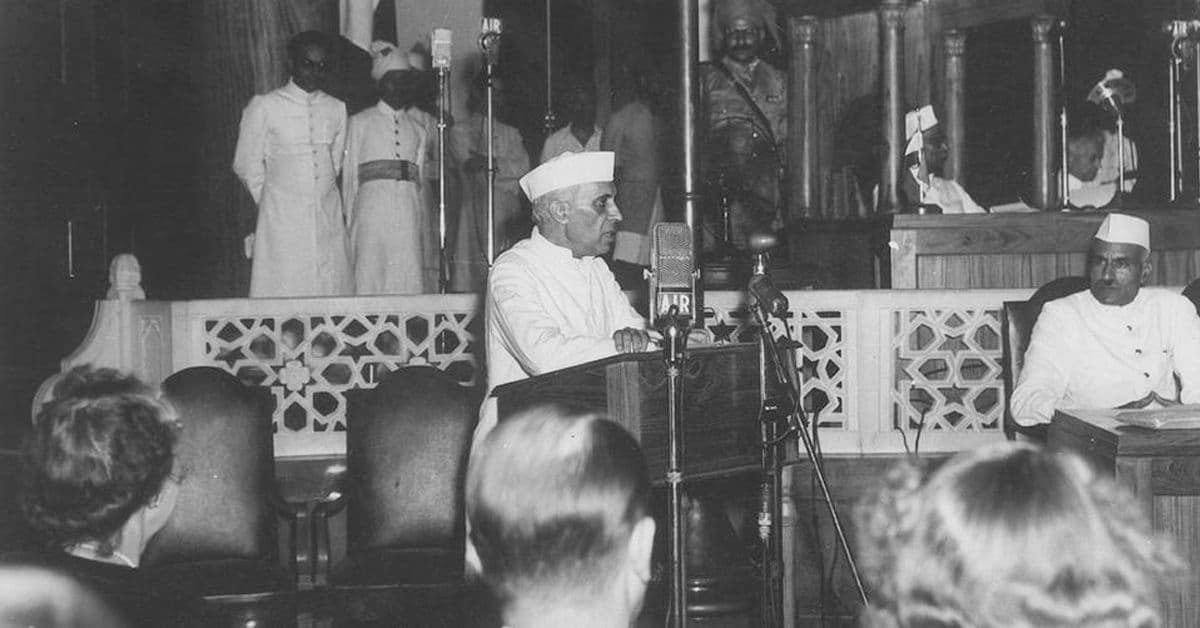
Post-war exhaustion and international pressure forced Britain to reconsider. Despite multiple proposals, communal divisions led to the Partition of India in 1947, creating India and Pakistan. On 15th August 1947, India finally broke free.
Legacy of the Freedom Struggle and Its Modern Relevance
India’s freedom struggle wasn’t just a political revolution; it was a moral awakening. It birthed principles of democracy, secularism, and equality that continue to define modern India. The spirit of unity in diversity remains its most enduring legacy.
FAQs about the Freedom Struggle of India
Q1. What was the main goal of the Indian freedom struggle?
To achieve complete independence from British colonial rule and establish a self-governing nation.
Q2. Who were the key leaders of India’s freedom movement?
Mahatma Gandhi, Jawaharlal Nehru, Subhas Chandra Bose, Bhagat Singh, Sardar Patel, and many others.
Q3. How did non-violence contribute to India’s freedom?
Gandhi’s philosophy of non-violence mobilized millions peacefully and exposed the moral bankruptcy of British rule.
Q4. What role did women play in the freedom struggle?
Women actively participated in protests, underground movements, and political campaigns, symbolizing gender empowerment.
Q5. When did India finally gain independence?
India achieved independence on August 15, 1947.
Q6. Why is the freedom struggle still relevant today?
It reminds us of the power of unity, justice, and peaceful resistance in building a strong democratic nation.
Conclusion: Lessons from India’s Quest for Freedom
The Freedom Struggle of India was not merely a fight against colonial oppression but a profound movement for human dignity, equality, and justice. It stands as a timeless reminder that the pursuit of freedom — through courage, intellect, and unity — can reshape history itself.